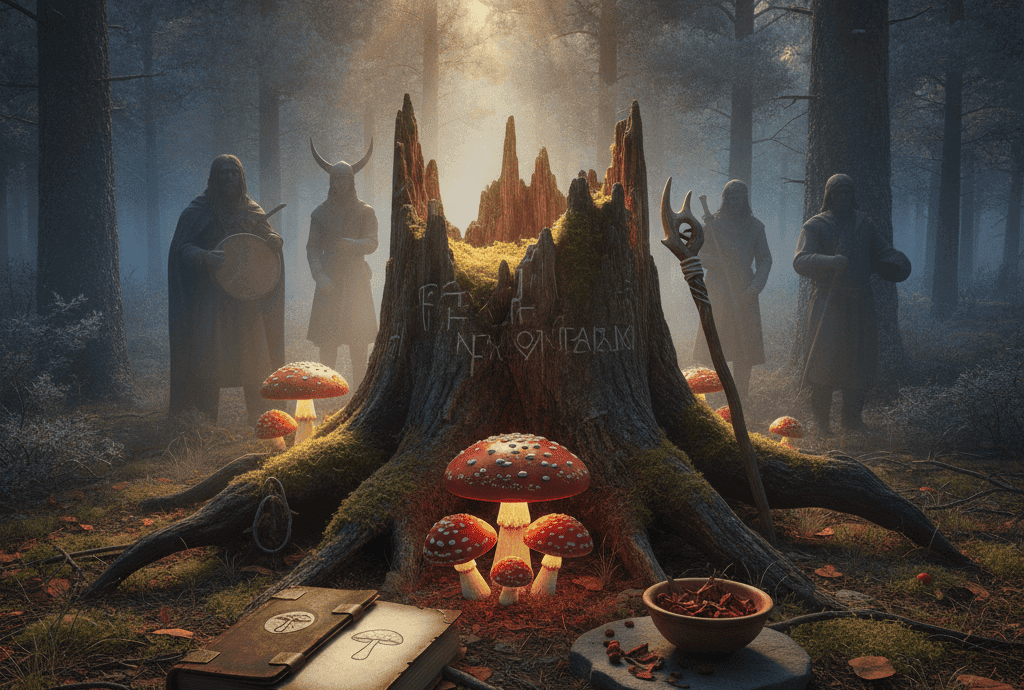
The striking red and white cap of the Fly Agaric mushroom, scientifically known as Amanita muscaria, captures the imagination. I often find people instantly recognize its image, even if they do not know its name. This mushroom is more than just a pretty face in the forest, because it carries a long and complex history.
My exploration into its past reveals a fascinating story woven into the fabric of human culture. This iconic fungus has played many roles, from sacred shamanic tool to the whimsical symbol of fairy tales. It has left an indelible mark on societies across different continents and through countless generations.
I aim to uncover the deep history of Fly Agaric folklore. We will trace its origins in ancient spiritual practices and follow its winding path into our modern understanding. Understanding this mushroom means looking at its powerful influence on human belief systems and artistic expression.
The Iconic Appearance of Amanita Muscaria
The Fly Agaric mushroom possesses a distinctive look that makes it one of the most recognizable fungi in the world. I see its bright red or orange cap, usually adorned with white or yellowish flakes, and instantly know what it is. These flakes are remnants of a universal veil that covers the young mushroom. Its stem, often thick and white, features a skirt-like ring and a bulbous base with concentric rings, which are also parts of the veil.
This mushroom’s visual appeal has led to its widespread representation in art and media. Many people associate it with forests and magical settings. The vibrant colors make it stand out against the greens and browns of its natural habitat. It truly is a captivating sight, especially when found growing beneath pine and birch trees.
I often reflect on how something so naturally beautiful can hold so much mystery and myth. Its appearance alone tells a story of nature’s artistry. We often see it pop up in children’s books and garden decorations, often without a full grasp of its potent historical significance. This recognition speaks to its deep cultural imprint.
The sheer visibility of this mushroom makes it a natural subject for folklore. Its easily identifiable features separate it from other fungi. I think this ease of recognition certainly contributed to its enduring legacy. It has become a kind of biological celebrity, recognizable even to those with no interest in mycology.
Ancient Roots of Fly Agaric in Shamanic Practices
The history of Fly Agaric reaches back thousands of years, rooted deeply in the spiritual practices of ancient peoples. I have found compelling evidence that certain indigenous communities, particularly in Siberia, held this mushroom in high regard. They did not simply see it as a food source or a curiosity. They saw it as a gateway to other realms.
Shamans would consume the mushroom to induce altered states of consciousness. This allowed them to communicate with spirits and gain insights. For these cultures, the Fly Agaric was a sacred tool, used for healing, prophecy, and spiritual guidance. Its use was surrounded by specific rituals and strict protocols, showing its profound importance.
Siberian Shamanism and the Red Mushroom
In the vast, icy landscapes of Siberia, the Koryaks, Evenks, and other peoples practiced rituals involving the Fly Agaric. Shamans would often dry the mushrooms before consumption, possibly to moderate their psychoactive effects. I understand this drying process may convert ibotenic acid into muscimol, a less toxic and more potent compound. Reindeer also famously eat these mushrooms, and shamans sometimes drank the urine of people or animals who had consumed them, because the active compounds pass through the body and are excreted.
The connection to reindeer is particularly interesting. These animals seem drawn to the mushroom, and their consumption sometimes plays a role in the folklore. I find it fascinating that animal behavior became integrated into human spiritual traditions. The practices were passed down orally through generations, preserving the mushroom’s sacred status.
These ancient uses highlight a deep respect for the mushroom’s power. It was never taken lightly. Instead, it was approached with reverence and intention. I see this as a testament to the profound spiritual needs it fulfilled for these communities. The ceremonies and preparations were intricate, reflecting a sophisticated understanding of its properties.
Fly Agaric’s Place in European Mythology and Legends
As we trace the mushroom’s influence further west, we find its imagery and lore woven into European traditions. I have observed its connection to various pagan beliefs and even modern holiday customs. The bright colors and distinctive spots made it a natural fit for fantastical stories. It often appeared near magical creatures.
Some theories even connect it to the origins of Santa Claus folklore. The red and white motif, along with its association with northern forests and reindeer, makes for a compelling, albeit speculative, link. I find this possibility quite intriguing, as it shows how deeply embedded this fungus might be in our collective consciousness, even unknowingly.
Norse Sagas and the Berserker Rage
The fierce Viking warriors known as berserkers are another key part of the mushroom’s European narrative. I have read accounts suggesting that berserkers consumed Fly Agaric before battles to induce a trance-like fury. This would make them fearless and powerful, like wild animals. The term “berserker” itself means “bear shirt” or “bare shirt,” hinting at their wild, uncontrolled nature in combat.
While the direct evidence for Fly Agaric use by berserkers is debated among historians, the theory persists because it fits the descriptions of their behavior. It is a powerful image, the idea of a warrior fueled by a mystical mushroom. This tells us a lot about how people viewed the mushroom’s potential to alter human states.
The tales of berserkers highlight a darker, more volatile side of the mushroom’s perceived power. It was not always about spiritual enlightenment. Sometimes it was about raw, primal force. I believe these stories emphasize the dual nature of such potent natural substances. They can offer insight but also unleash uncontrolled energy.
The Controversial Link to Modern Pop Culture
The Fly Agaric has transcended ancient rituals and mythological sagas, making its way into modern popular culture. I frequently encounter its image in cartoons, video games, and illustrations, often depicted as a friendly, magical element. Its appearance is so striking that artists naturally gravitate towards it as a visual shorthand for enchantment and wonder.
This modern portrayal sometimes sanitizes its more potent and dangerous historical associations. Yet, it also speaks to its enduring appeal as a symbol. Children’s stories in particular have adopted it as a whimsical item. Many people know it from these lighthearted contexts, far removed from its ancient psychoactive uses.
The Magic Mushroom in Children’s Stories
Perhaps one of the most famous appearances of a mushroom resembling Fly Agaric is in Lewis Carroll’s Alice’s Adventures in Wonderland. Alice consumes pieces of a mushroom that change her size, making her grow or shrink. While not explicitly named Fly Agaric, the visual and effects align with traditional lore. This story cemented the image of a magical mushroom in the Western imagination.
Similarly, the popular video game series Super Mario Bros. features power-up mushrooms that give Mario strength and growth. These mushrooms are famously red with white spots, directly echoing the appearance of Amanita muscaria. I think this connection, whether intentional or not, has introduced the mushroom’s iconic look to generations of gamers. The game implies a benign, beneficial power, which contrasts sharply with the mushroom’s actual toxicity. To learn more about this and other fascinating aspects of this mushroom’s story, I recommend visiting Burlap and Blue.
These examples show how cultural symbols evolve. The mushroom transitioned from a sacred shamanic tool to a playful icon in entertainment. It retained its sense of mystery and magic but shed its more serious or dangerous connotations for popular consumption. I see this as a powerful example of how folklore adapts over time, finding new expressions in changing societies.
Scientific Understanding Versus Folk Beliefs
While folklore paints a rich picture of the Fly Agaric, modern science offers a different, albeit equally fascinating, perspective. I understand that the mushroom contains psychoactive compounds, primarily muscimol and ibotenic acid. These compounds interact with the brain’s neurotransmitters, leading to the altered states described in shamanic accounts. Symptoms of consumption can include disorientation, euphoria, muscle spasms, and even seizures.
It is important to know that Fly Agaric is toxic. Its consumption can cause serious illness and, in rare cases, death. I always caution against experimenting with wild mushrooms, because proper identification and preparation are crucial. Folk traditions often involved specific methods, like drying or ingesting second-hand, that may have reduced toxicity. However, these methods are not scientifically validated for safety.
The scientific study of Amanita muscaria helps us understand the physiological basis for its legendary effects. It separates myth from chemical reality. But it does not diminish the cultural significance of the mushroom. Instead, it provides a deeper appreciation for how ancient peoples interpreted and utilized its potent properties. I see a space where scientific understanding and historical folklore can coexist, each enriching the other without replacing it.
Modern mycologists categorize the Fly Agaric as a hallucinogenic mushroom. It is not generally consumed for recreational purposes in most cultures today because of its unpredictable effects and high toxicity. This contrasts sharply with its ancient reverence. This shift reflects a move from spiritual or survival use to a more cautionary scientific approach. I believe it shows humanity’s evolving relationship with powerful natural substances.
Enduring Legacy and Cultural Resonance
The deep history of Fly Agaric folklore reminds us of the profound connections between nature and human culture. This vibrant mushroom has served as a symbol, a spiritual guide, and a source of wonder across many eras and civilizations. From the harsh tundras of Siberia to the whimsical pages of children’s books, its image and stories continue to captivate us. I am continually amazed by how a single species of fungus can hold such a rich and varied narrative, reflecting so much about humanity itself.
Its powerful appearance ensures its place in art and popular media. The debates about its historical use by berserkers or its inspiration for Santa Claus add layers of intrigue. It is a testament to the mushroom’s intrinsic ability to spark imagination and curiosity. I think we can all appreciate the depth of its cultural impact.
Exploring the folklore of the Fly Agaric shows us how our ancestors made sense of their world through nature’s mysteries. It encourages us to look deeper at the plants and fungi around us, because many hold forgotten histories. I invite you to keep learning about these captivating natural wonders and their timeless tales. Let us continue to explore how the natural world shapes our stories and traditions.

Advertisement

Advertisement

Sponsor